Before we get to Ozempic, semaglutide, and the billion-dollar GLP-1 drug industry, we need to talk about a study from 2004 that the wellness internet mostly got wrong. Nilsson and colleagues published a paper in the American Journal of Clinical Nutrition that has been misread ever since. Twelve healthy volunteers. Test meals matched on carbohydrate content. Whey protein versus white bread as a reference. The result: whey produced 90% higher insulin AUC than bread, despite producing 57% lower blood glucose AUC.
Same subjects. Same study. Same day. Whey raised insulin dramatically more than bread did — while raising blood sugar dramatically less. This one data point has been used to argue that whey protein causes insulin resistance, that protein spikes are dangerous, and that people concerned about metabolic health should avoid whey. Every one of those conclusions is wrong. Understanding why requires understanding what insulin actually does — and what GLP-1 has to do with it.
The Distinction That Changes Everything
There are two different questions about insulin that get conflated constantly in nutrition discourse. The first is: does this food acutely raise insulin? The second is: does habitual consumption of this food cause insulin resistance? These are not the same question, they do not have the same answer, and confusing them produces exactly the kind of half-true health advice that has people avoiding egg whites and chicken breast on the grounds that protein spikes insulin.
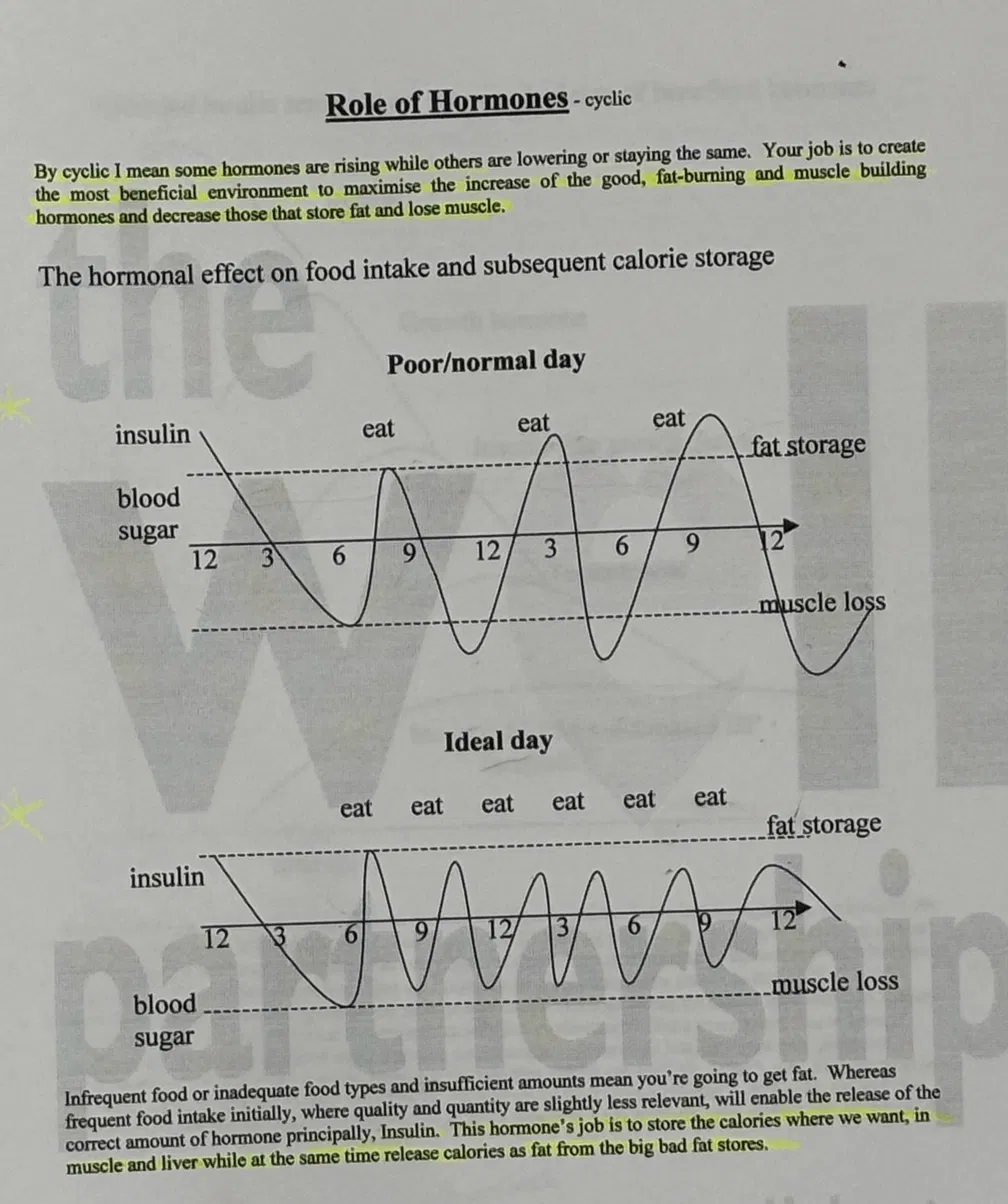
Acute postprandial insulin is physiological. Your pancreas evolved to release insulin after meals. Every meal that contains protein, carbohydrate, or a combination of both will produce an insulin response. This is not pathology. This is normal endocrine function. The pancreatic beta cell detects rising amino acid concentrations, rising glucose, and incretin hormones from the gut wall, and it releases insulin in response to that signal. Insulin then does its job: it facilitates amino acid uptake into muscle for protein synthesis, it facilitates glucose clearance from blood, and it signals adipose tissue and liver about the fed state. Insulin appearing after a meal is not a problem. It is a solution.
Chronic fasting hyperinsulinaemia is pathological. When fasting insulin is chronically elevated — not because you just ate, but because peripheral tissues have become resistant to insulin's signal and the pancreas is compensating by producing more — that is the metabolic disease state. Fasting insulin above my working band (about 3–8 µIU/mL, 20–50 pmol/L — a clinical target, not an outcome-validated range), HOMA-IR trending upward, triglycerides rising and HDL falling: this is the pattern that often precedes a raised glucose or HbA1c, and it is easy to miss if insulin is never measured. This has nothing to do with whey protein.
The “insulin from whey is dangerous” argument maps a half-true rule — carbohydrates raise insulin — onto a different question: what drives metabolic disease? Acute postprandial insulin from a protein-rich food that simultaneously lowers blood glucose is not the metabolic problem most people think it is. It is the opposite of the metabolic problem.
The GLP-1 Mechanism — What Ozempic Is Mimicking
GLP-1 (glucagon-like peptide 1) is a hormone released by the gut when food arrives. It increases insulin release when blood glucose is up, holds back glucagon, slows how fast the stomach empties and signals fullness to the brain. Semaglutide and liraglutide copy it, but act far longer than the body’s own GLP-1, which lasts about two minutes in the blood. For the drugs themselves, their side effects and what to test, see GLP-1: what your prescriber didn’t tell you.
Protein is a strong natural stimulus of GLP-1 release, though fat and carbohydrate stimulate it too and studies differ on which is strongest. Specifically, the amino acids leucine, isoleucine, valine (branched-chain amino acids), lysine, and threonine — abundantly present in whey — are strongly insulinotropic. In the 2007 Nilsson study a mixture of exactly those five amino acids reproduced most of whey’s insulin and glucose effect without any extra GIP or GLP-1 response, so the amino acids themselves, and GIP, carry much of it. Whey raises insulin not because it is metabolically disruptive, but because it powerfully stimulates the normal gut hormone cascade that makes insulin secretion appropriate, glucose clearance effective, and appetite signals meaningful. The 80% higher GIP (glucose-dependent insulinotropic polypeptide, another incretin) response to the whey drink in that 2007 study is part of the same story.
Pre-Meal Protein — The Clinical Application
The mechanistic understanding produces a directly practical protocol: consuming protein 15–30 minutes before a carbohydrate-containing meal produces meaningfully better postprandial glucose control than consuming the same food together or without the protein pre-load.
The mechanisms are compounding. GLP-1 is released by the protein, slowing gastric emptying before the carbohydrate arrives. Insulin is primed by the incretin response before glucose enters the bloodstream, producing faster and more effective glucose clearance. CCK (cholecystokinin) is released by protein arrival in the small intestine, amplifying satiety signalling and further slowing gastric transit. The carbohydrate that follows enters a gut that is already signalling satiety, a blood sugar regulatory system that is already primed, and a gastric emptying mechanism that is already slowed.
In type 2 diabetes and prediabetes, this protocol has been studied directly. In a small randomised crossover trial in 15 people with well-controlled type 2 diabetes, 50 g of whey taken 30 minutes before a high-glycaemic breakfast lowered glucose over the following three hours by 28% and raised GLP-1 and insulin (Jakubowicz et al., 2014). That is a real effect in a small, short study, and 50 g is a large dose. It works through the same hormone the drugs target, at a small fraction of the strength.
The Satiety Index — What This Connects To
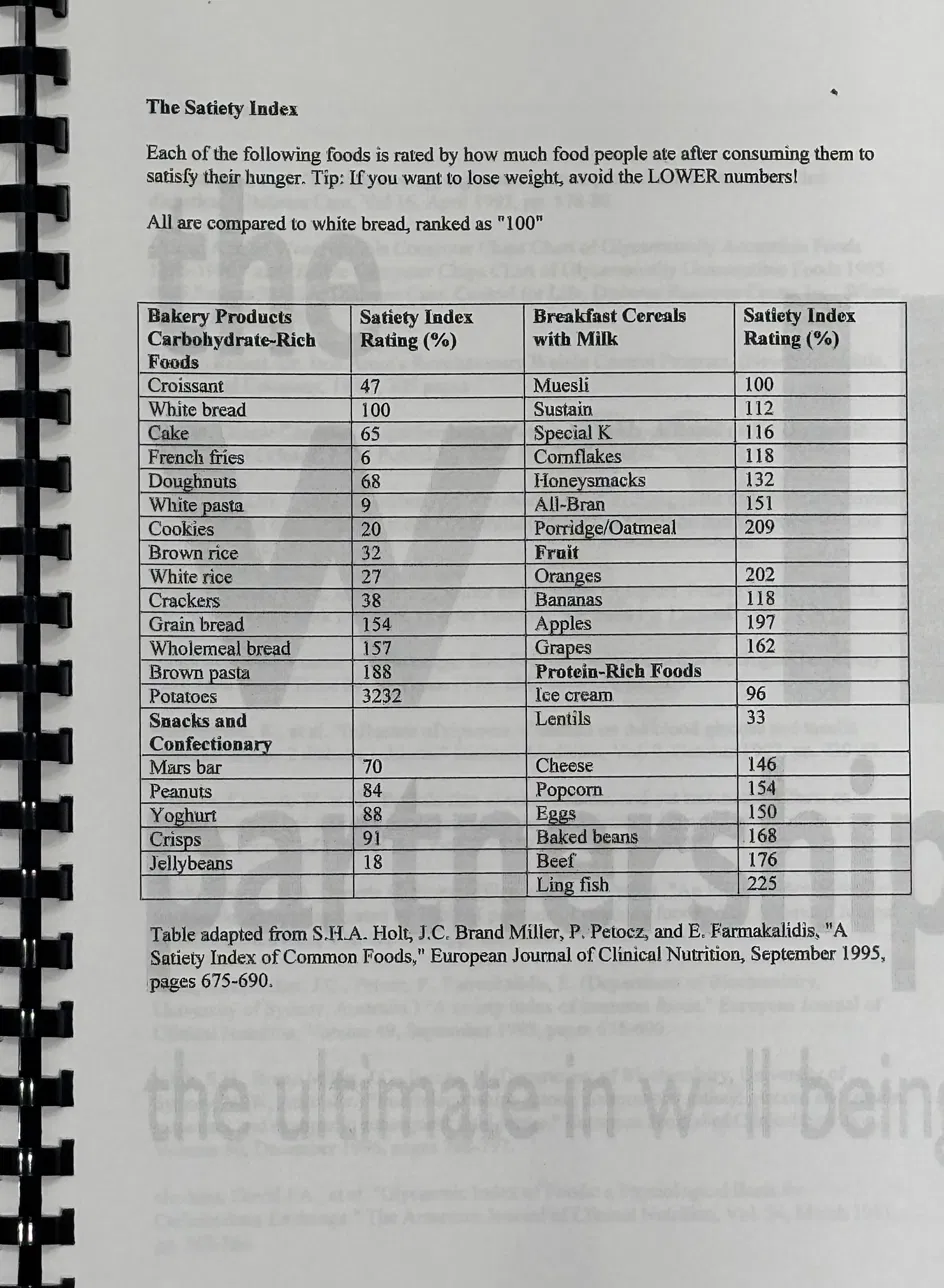
Susanna Holt’s 1995 Satiety Index, published in the European Journal of Clinical Nutrition, measured the satiety produced per calorie across 38 common foods, with white bread as the 100% reference. Boiled potatoes scored 323% — three times the satiety of bread per calorie. Croissants scored 47%. Fish, oat porridge, and oranges scored consistently high. The finding that challenged the prevailing carbohydrate-as-satiety narrative: many high-protein and high-water-content foods produced substantially more satiety than their glycaemic index or calorie content would predict.
Holt found that protein, fibre and water content correlated with satiety per calorie, and fat content correlated negatively. Some of that overlaps with the gut-hormone signalling that GLP-1 drugs amplify. Protein stimulates GLP-1 and CCK directly. Fibre slows gastric emptying, and its fermentation products can stimulate GLP-1 release (mostly shown in laboratory and animal work). Volume and water content activate gastric mechanoreceptors that contribute to satiety signalling. Foods that are simultaneously high in protein, fibre, volume, and water content — eggs, fish, legumes, root vegetables — naturally activate multiple satiety pathways simultaneously. Foods that are calorie-dense, low in fibre, and low in protein — processed snacks, refined starches, liquid calories — bypass most of them.
The GLP-1 drugs are not new biology; they amplify a signal food already sends. But the amplification is the point. A weekly injection produces drug levels food cannot come close to, and weight loss of around 15% in trials. Meal design works with the same system and is worth doing on its own merits — it is not a substitute of equal size.
What This Means in Practice
Lead every meal with protein
A good portion of protein (around 25–30 g) at each meal, eaten before the carbohydrate, is a sensible habit for satiety and glucose. This is not about protein being inherently superior. It is about the sequence of signals the gut sends to the regulatory systems.
Pre-meal protein for blood sugar management
If post-meal glucose excursions are a concern — HOMA-IR elevated, HbA1c trending upward, afternoon crashes — a protein portion 20–30 minutes before the main carbohydrate load may blunt the glucose rise. The trial evidence is mostly for whey; eggs or fish are reasonable but less studied.
Choose high-satiety index foods
In Holt’s index, boiled potatoes, fish, oat porridge and oranges scored highest on satiety per calorie. Ultra-processed foods consistently score lowest. The practical implication: a diet built around high-satiety-index foods naturally reduces total calorie intake without calorie counting, because the satiety signals are proportionally stronger.
Liquid calories are the exception
Liquid calories — including fruit juice, smoothies, and caloric drinks — bypass the gastric mechanoreceptors and the full satiety cascade. They are absorbed rapidly, produce a sharp glucose response, and generate less satiety per calorie than their solid equivalents. This is why the same apples eaten whole are more filling than the same apples drunk as juice.
The fear of protein raising insulin is based on a genuine observation applied to the wrong conclusion. Whey does raise insulin substantially. It also lowers the glucose response, raises incretin hormones, triggers satiety signalling through multiple pathways, drives muscle protein synthesis, and — in the clinical literature on type 2 diabetes — reduces postprandial glucose excursions when consumed before a carbohydrate meal. These are the opposite of the metabolic harms the insulin-fear narrative predicts.
The drugs that have captured global attention for weight loss and blood sugar management work by amplifying a mechanism that food has always activated. Understanding the mechanism — rather than the drug that exploits it — gives you practical tools that work with the same system through food. They are smaller in effect than the drugs, cheaper, and worth doing either way.