The reason you are hungry an hour after eating certain foods is not a lack of willpower. It is a mismatch between the food you ate and the physiological machinery your body uses to register that it has been fed. That machinery — the satiety system — operates through specific biological signals that different foods activate to very different degrees. Understanding which signals exist and which foods trigger them is the most practically useful single piece of nutrition knowledge available for anyone trying to manage weight, energy, or blood sugar without a pharmaceutical intervention.
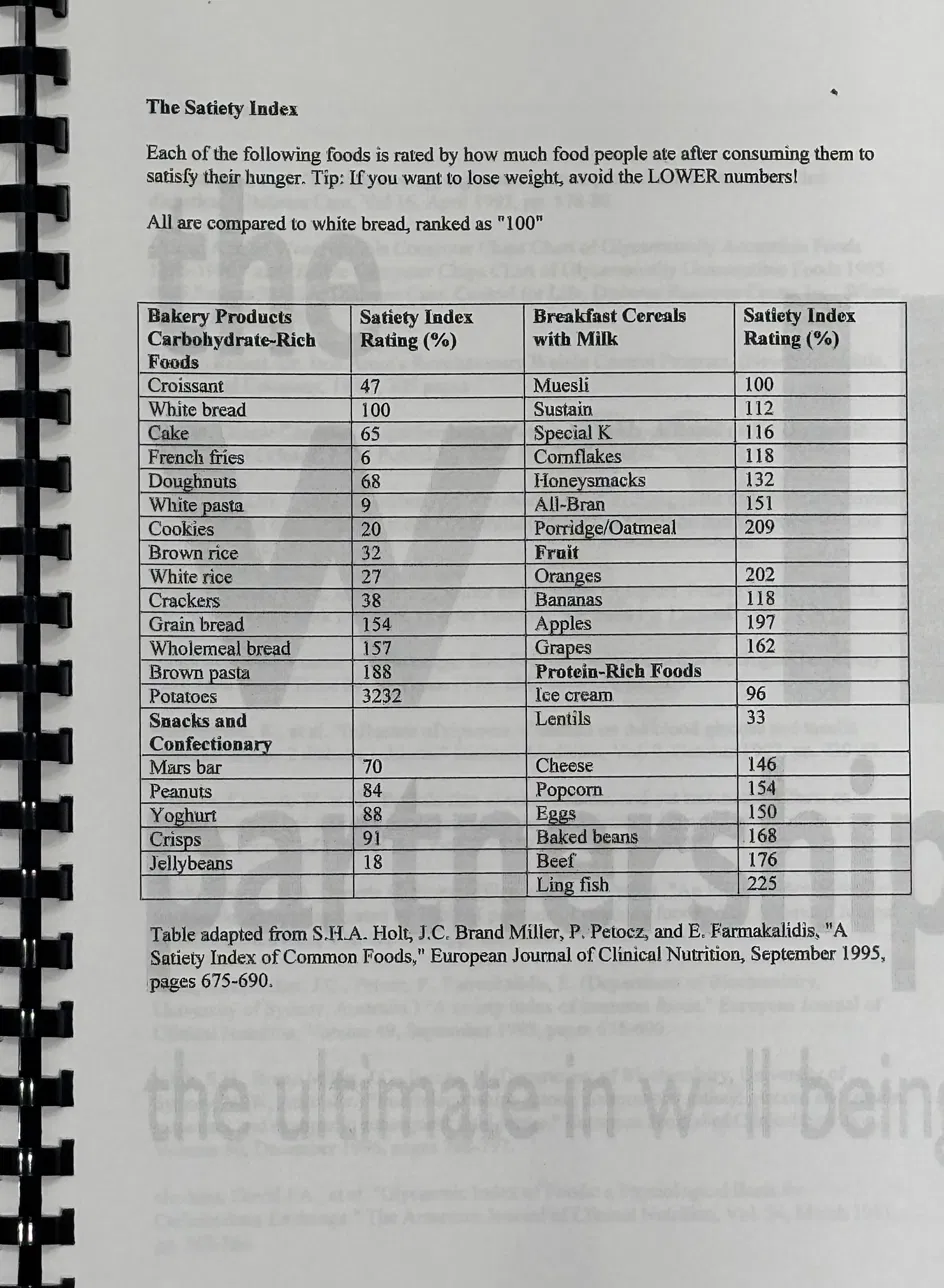
Susanna Holt’s 1995 paper in the European Journal of Clinical Nutrition established the first systematic Satiety Index of common foods. The methodology was straightforward: subjects consumed 240-calorie portions of 38 different foods. Over the following two hours, their hunger ratings were measured at regular intervals. White bread — the dietary staple that had defined the glycaemic index as a reference point — was set at 100%. Every other food was measured against it. The results were counterintuitive enough that they challenged prevailing assumptions about what made food filling.
What the Index Actually Showed
The findings sorted foods into patterns that defied the simple fat-bad, carbohydrate-good narrative dominant at the time:
| Food | Satiety Index (%) | Category |
|---|---|---|
| Boiled potatoes | 323% | Highest of all 38 foods |
| Ling fish | 225% | Protein-rich |
| Porridge / Oatmeal | 209% | Whole grain cereal |
| Oranges | 202% | Whole fruit |
| Apples | 197% | Whole fruit |
| Baked beans | 168% | Legume |
| Grain bread | 154% | Whole grain |
| Eggs | 150% | Protein-rich |
| Cheese | 146% | Protein-fat |
| White bread | 100% | Reference food |
| Mars bar | 70% | Confectionery |
| Crisps | 91% | Snack food |
| Croissant | 47% | Refined bakery |
| White rice | 27% | Refined grain |
| White pasta | 9% | Refined grain |
| Croissant | 47% | Refined bakery |
| French fries | 6% | Processed potato |
Boiled potatoes at 323% — the most filling food tested — while French fries from the same ingredient scored just 6%. White pasta at 9% while baked beans scored 168%. Croissants at 47% while porridge scored 209%. The calorie content was controlled. What varied was the food’s capacity to trigger the body’s satiety mechanisms.
The potato result surprised people in 1995 and still surprises them now. Potatoes had been demonised as a high glycaemic index food to be avoided. Yet per calorie, boiled potatoes produced more than three times the satiety of white bread. The lesson is not that glycaemic index is irrelevant — it is that satiety and glycaemic response are different measurements that do not always correlate.
The Four Mechanisms That Determine Satiety
Holt’s analysis identified four independent variables that predicted satiety scores across the 38 foods. Each operates through a different physiological pathway. Foods that activate multiple pathways simultaneously produce the highest satiety per calorie. Foods that activate few or none are those that leave you hungry within an hour.
1. Protein content
The most potent single predictor of satiety per calorie. Protein directly stimulates GLP-1 and CCK release from the gut wall — the same hormones that GLP-1 drugs like Ozempic amplify pharmacologically. Amino acids (particularly leucine, isoleucine, and lysine) signal directly to pancreatic beta cells and to hypothalamic satiety centres. This is why fish scores 225% and eggs score 150% — and why a whey protein pre-load before a carbohydrate meal meaningfully blunts the postprandial glucose excursion.
2. Fibre content
Dietary fibre slows gastric emptying — the rate at which food leaves the stomach into the small intestine. A slower emptying rate means a more gradual glucose entry into the bloodstream, a more sustained satiety signal, and longer time before hunger returns. Fibre also feeds the gut bacteria that produce short-chain fatty acids, which independently stimulate L-cell GLP-1 release. Porridge at 209% and baked beans at 168% owe their high satiety scores substantially to their fibre content.
3. Volume and water content
The stomach has mechanoreceptors — stretch receptors that respond to physical volume and send satiety signals via the vagus nerve to the hypothalamus. A high volume, high water content food activates these receptors per calorie more than a calorie-dense, low-water food. Boiled potatoes are approximately 80% water. French fries are approximately 40% water but substantially higher in fat-derived calories. Same potato, opposite satiety score, because the physical volume per calorie is radically different. Whole fruit scores higher than juice for identical caloric reasons.
4. Palatability and reward value
Counter-intuitively, very high palatability can reduce satiety by overriding the physiological satiety signals through the dopaminergic reward system. Highly palatable ultra-processed foods are designed to produce sustained eating behaviour despite adequate calorie intake — the “bliss point” of fat, sugar, and salt combinations that keeps the reward signal active and the satiety signal suppressed. This is the mechanism behind the observation that people consistently eat more calories from palatable processed foods than from less engineered whole foods at the same sitting.
Why Ultra-Processed Food Is Designed to Fail on Every Metric
French fries score 6% on the Satiety Index. A croissant scores 47%. White pasta scores 9%. These are not random findings — they reflect specific features of how these foods are produced and what happens to their macronutrient and physical structure in processing.
Ultra-processing reduces fibre — the milling of whole grain wheat to white flour removes the bran and germ that carry the fibre. It concentrates calories by removing water — frying dehydrates potato while adding fat, dramatically increasing calorie density per gram of food. It engineers palatability at the expense of satiety — fat and salt and sugar combinations that are novel enough to keep the reward system engaged while the satiety signals are suppressed by the low protein, low fibre, low volume profile. And it produces rapid digestion and absorption — refined starch in a highly processed matrix reaches the bloodstream quickly, producing a glucose spike and subsequent insulin-driven glucose clearance that creates the energy crash and cravings cycle that keeps the person eating again within an hour.
This is not accidental. The food industry employs sensory scientists, flavour chemists, and texture engineers whose explicit purpose is to identify the specific combinations of fat, sugar, salt, and texture that maximise consumption per eating occasion. The Satiety Index reveals the mechanism of this engineering in reverse — the foods that score lowest are, almost without exception, the most processed, the most refined, and the most commercially dominant in the modern food environment.
The GLP-1 Connection — Drugs Doing What Food Was Always Doing
The GLP-1 weight loss drug industry — semaglutide, liraglutide, tirzepatide — is valued at over a hundred billion dollars and growing. The drugs work by activating GLP-1 receptors more potently and for longer than the natural GLP-1 that food triggers. The clinical effects are real: reduced appetite, slower gastric emptying, better glucose control, substantial weight loss.
What the coverage of these drugs almost never mentions is that the mechanism they exploit is the same one that high-satiety foods have always activated naturally. Protein-rich, fibre-dense, high-volume whole foods stimulate GLP-1 release from L-cells in the small intestine with every meal. A diet built around these foods produces a chronic GLP-1 environment that is less dramatic than the pharmacological version but operates through the same pathway, without cost, without injection, and without the side effect profile.
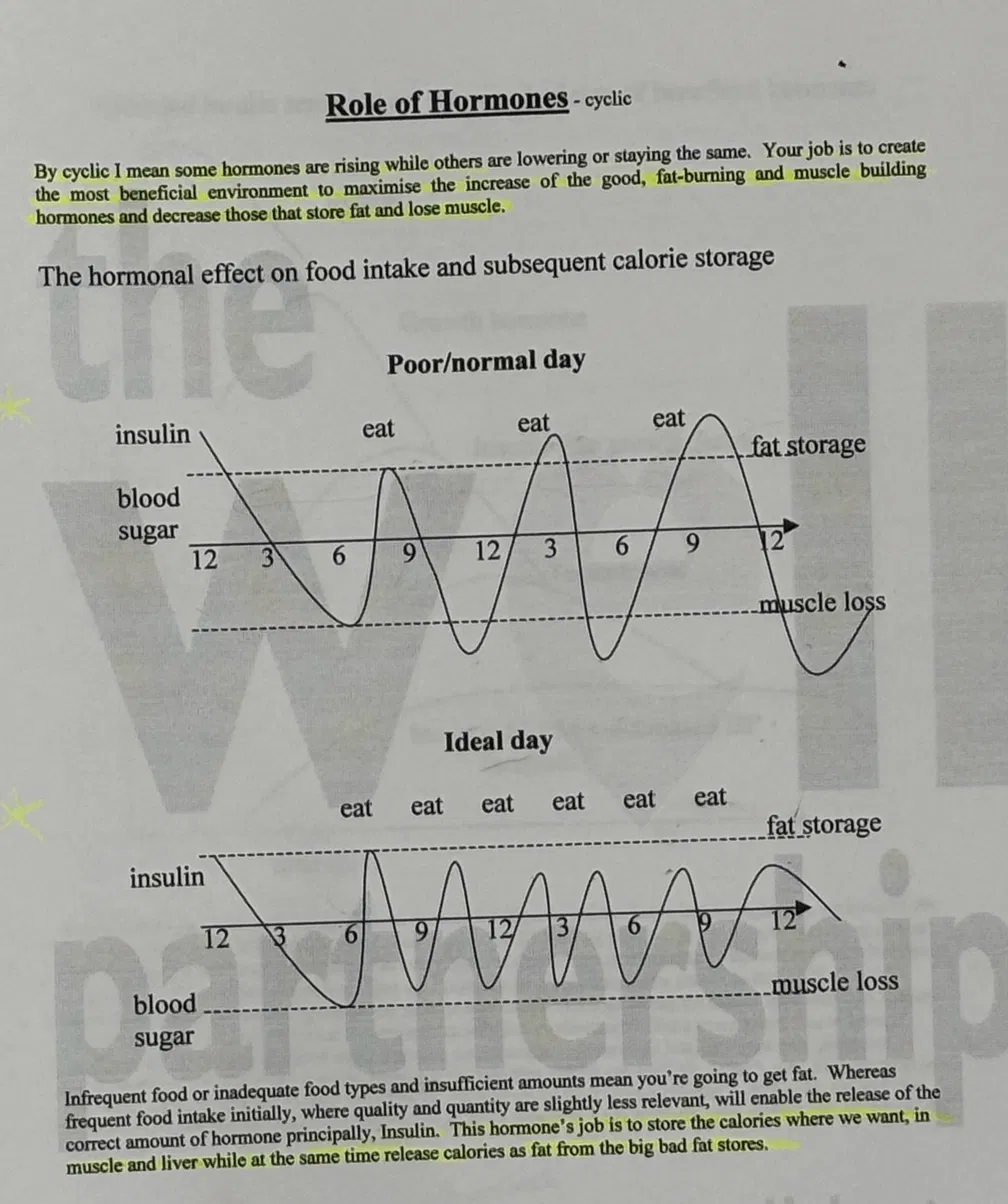
The dietary approach that consistently produces the highest natural GLP-1 environment is precisely what the Satiety Index predicted in 1995: meals anchored by protein, rich in fibre and whole food volume, containing adequate water content, and low in the engineered palatability that overrides satiety signals. This was understood thirty years ago. It was being taught to clients as practical meal planning in the mid-1990s. The mechanism now has a pharmaceutical version — but the food version was always there.
Practical Application — Building High-Satiety Meals
The Satiety Index translates directly into meal construction principles that do not require calorie counting, food restriction, or willpower expenditure. The goal is to build meals that activate as many of the four satiety mechanisms as possible simultaneously.
Lead with protein (25–35g per meal): Fish, eggs, meat, legumes, Greek yoghurt. Protein activates GLP-1 and CCK, and produces the highest thermogenic effect of any macronutrient — 18% of its calories are used in the digestion process alone. This is the non-negotiable foundation.
Add volume through whole vegetables: High water content vegetables — leafy greens, cucumber, courgette, peppers, tomatoes — add physical volume that activates gastric mechanoreceptors without significant calorie contribution. The meal becomes more filling without becoming more caloric.
Include fibre from whole food sources: Legumes, root vegetables, whole grains, fruit with skin. The fibre slows gastric emptying, feeds the gut bacteria that produce additional GLP-1-stimulating SCFAs, and sustains the satiety signal across the 2–3 hours between meals.
Drink water with meals, not juice: Liquid calories — including fruit juice — bypass the gastric volume mechanoreceptors entirely. Two whole oranges produce a measurably different satiety response than the same calories as orange juice, because the physical volume is absent. Water adds volume to the meal without adding calories.
Minimise the lowest-scoring foods: French fries, white pasta, croissants, white rice, and confectionery score so low on satiety that including them in a meal means relying on the other components to do all the satiety work. Used as the primary carbohydrate source, they are almost guaranteed to produce hunger before the next scheduled meal.
The question that the Satiety Index answered in 1995 — and that remains underappreciated today — is not which foods have the most calories, or which foods raise blood sugar most, but which foods keep you full for the longest per calorie consumed. That question has a clear, measurable, food-specific answer. Building meals around those foods produces a fundamentally different hunger and energy experience than building meals around their low-satiety equivalents — and does so through the same physiological mechanisms that billion-dollar pharmaceutical interventions are now exploiting at ten thousand times the price.
The food version was always there. It just didn’t need a prescription.