Reading the diagram
Five stages, one sequence
Nothing here is unusual on its own. What is unusual is the order — and that the sequence produces something that can be shown to be wrong.
Before any testThe Case File
A full intake: your health story and its timeline, a scored symptom burden across every system, lifestyle, medications and their nutrient depletions, movement and posture, metabolic nature, toxin exposure, and cumulative stress load.
Every form is read personally before your first consultation. Nothing is scored by machine and handed over unexamined.
What the Case File producesYour Health Status Report
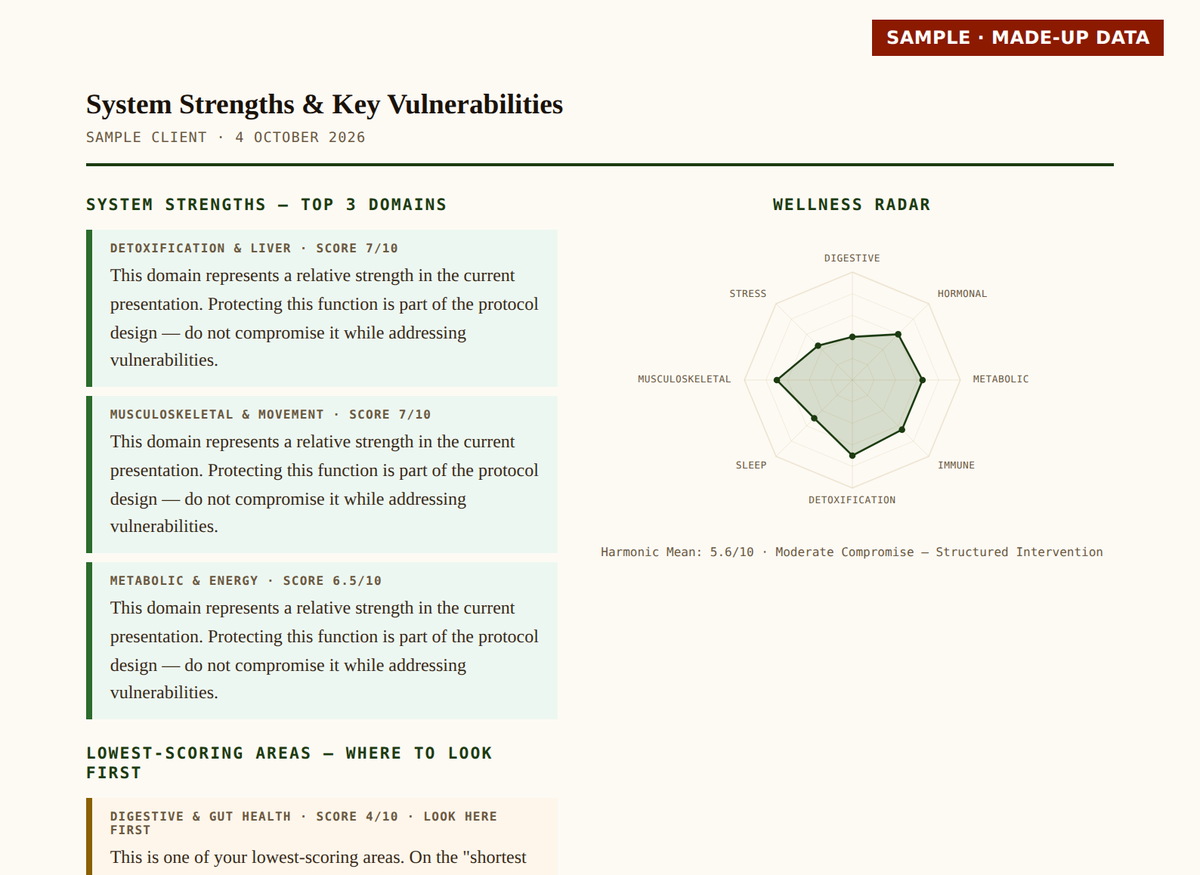
A clinical picture built from the intake alone — domain scores, where your system is strong, where it is vulnerable, and a foundational protocol you can begin straight away.
And a test priority order. This is the part that saves money. Rather than running everything and sorting it out afterwards, the report says which tests will earn their cost for your specific presentation, and which sequence answers the most useful question first.
See an example Health Status Report, for a made-up client, with notes on each section.
Directed, not exhaustiveThe functional tests
Blood chemistry read against functional ranges rather than reference ranges; GI-MAP for the gut ecology and barrier; DUTCH Plus for hormones and their metabolites; organic acids for mitochondrial and neurotransmitter function; IgG for delayed food reactions.
Most people do not need all five at once. The report decides.
The investigation suiteThe analysers
Results are not read one panel at a time. The analysers cross-reference them — a gut finding that explains a blood chemistry pattern, a hormone result that changes how an organic acid is interpreted — and a conflict-resolution engine reconciles recommendations that point in different directions.
This is the layer that turns five sets of numbers into one coherent picture instead of five separate opinions.
Delivered through a programmeOne protocol, and a written prediction
Diet, rest, exercise, stress and targeted supplementation, sequenced so the thing most in the way is addressed first.
And the part most frameworks leave out. Before the protocol starts, we write down what we expect to change, which markers would show it, and by when. At retest we check. One of the possible outcomes is that the prediction was not met — which is the only way any of this can be shown to be wrong.
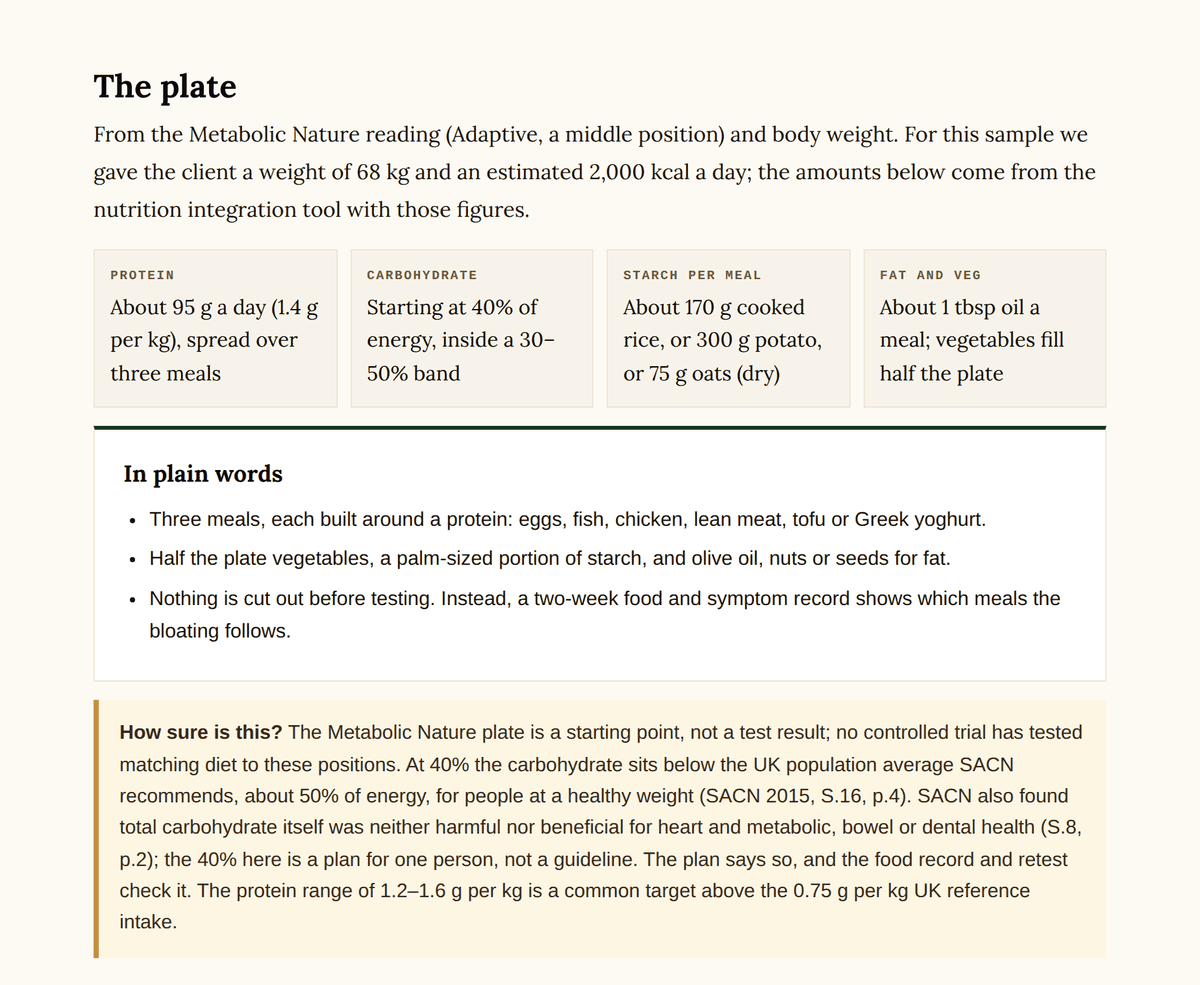
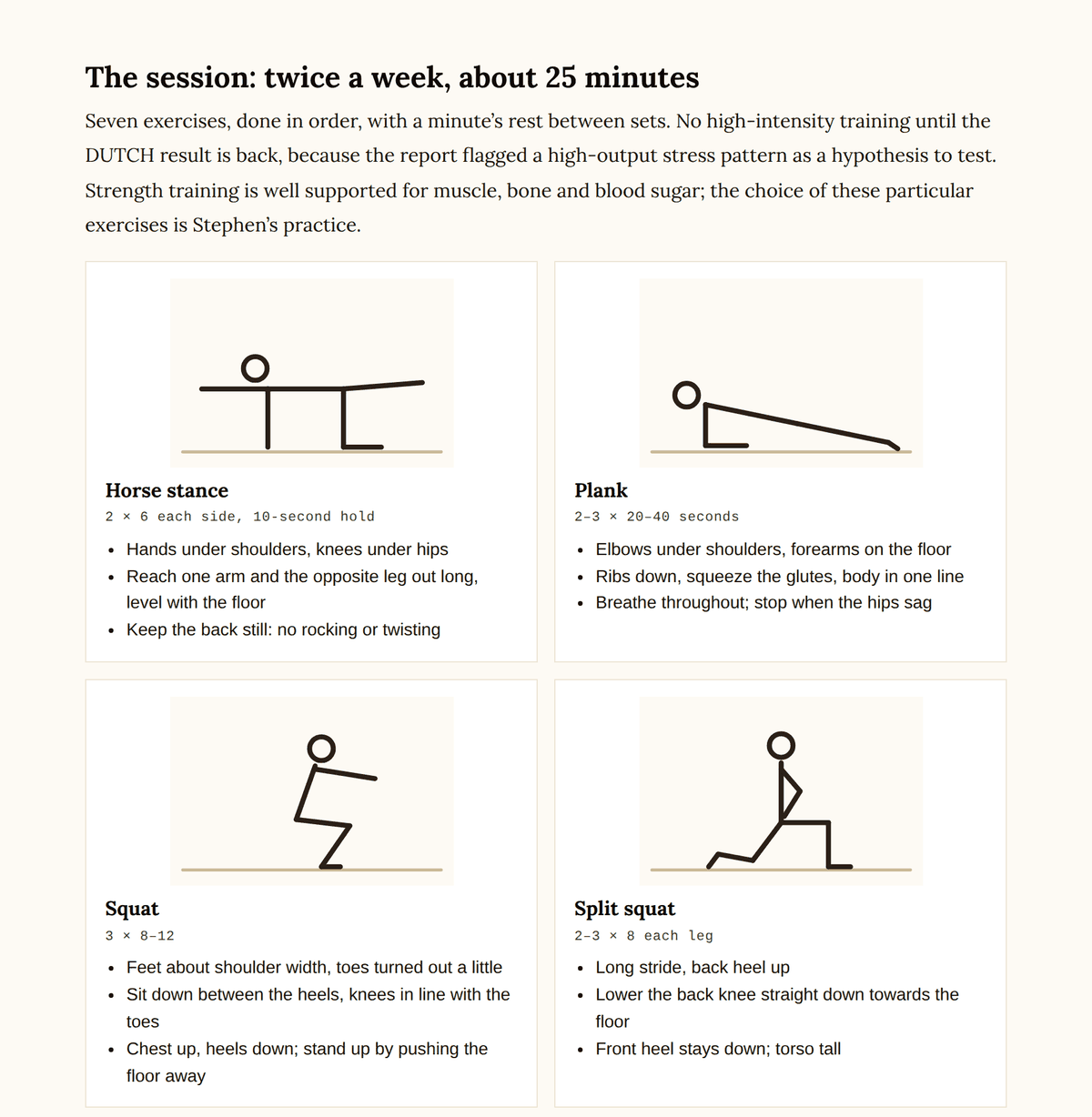
See an example plan for the same made-up client: food, lifestyle, movement and supplements, with the evidence for each.