Five tests will almost always flag something, because every reference range leaves some healthy people outside it. The skill is knowing which findings matter, which to set aside, and when the answer belongs with your GP. That is what the TDG Programme is for.
The 20-minute call is free — no obligation
Standard medicine is good at identifying disease. It is less set up for the person whose results are in range but who still doesn't feel well. Functional testing can add leads there. Some of those leads are well evidenced and some are not, and I'll tell you which.
The conditions below are the most common presentations in the TDG programme. Most clients arrive having already spent years being investigated, reassured, and sent away without answers.
Each test addresses a different dimension of your health. Together they look at the same symptoms from different samples, which no single test can do. Reading them together is clinical reasoning, not a validated method, so each result is weighed against the others and against your history.
No single test covers every system. This is the honest version: where a test measures something directly, where it only gives a clue that has to be confirmed, and where it doesn’t look at all.
Swipe the table sideways to see all five tests.
| Body system | Blood chemistry | GI-MAP stool | DUTCH Plus | Metabolomix+ | HealthBeings IgG food panel |
|---|---|---|---|---|---|
| Digestion and gut | |||||
| Hormones and stress | |||||
| Blood sugar and energy | |||||
| Thyroid | |||||
| Nutrient status | |||||
| Immune and inflammation | |||||
| Detox and oxidative stress |
Blood coverage depends on the panel chosen; thyroid antibodies, fasting insulin and inflammation markers are on some panels and not others. An IgG food result mostly reflects what you eat, so it is a lead for a supervised elimination and reintroduction, never an avoidance list. A “clue” is confirmed with a second test, your history, or your GP before anything is acted on.
Five common reasons people come to me, the systems worth checking for each, and the tests that look at them. These are places to look, not causes: most symptoms have more than one possible driver, and some belong with your GP first.
The TDG Programme is a complete clinical investigation, not a single appointment. Everything is sequenced deliberately — each phase builds on the last.
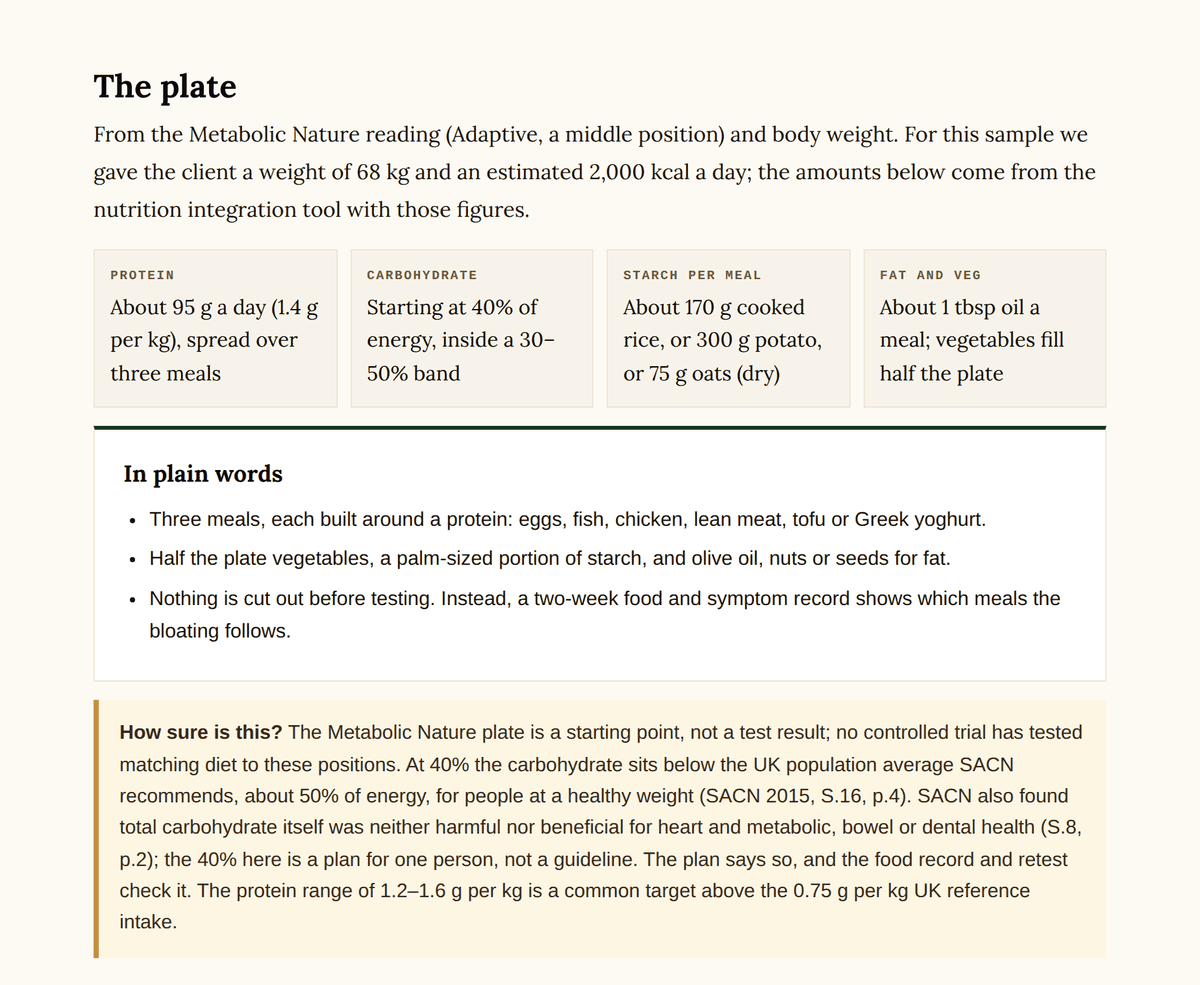
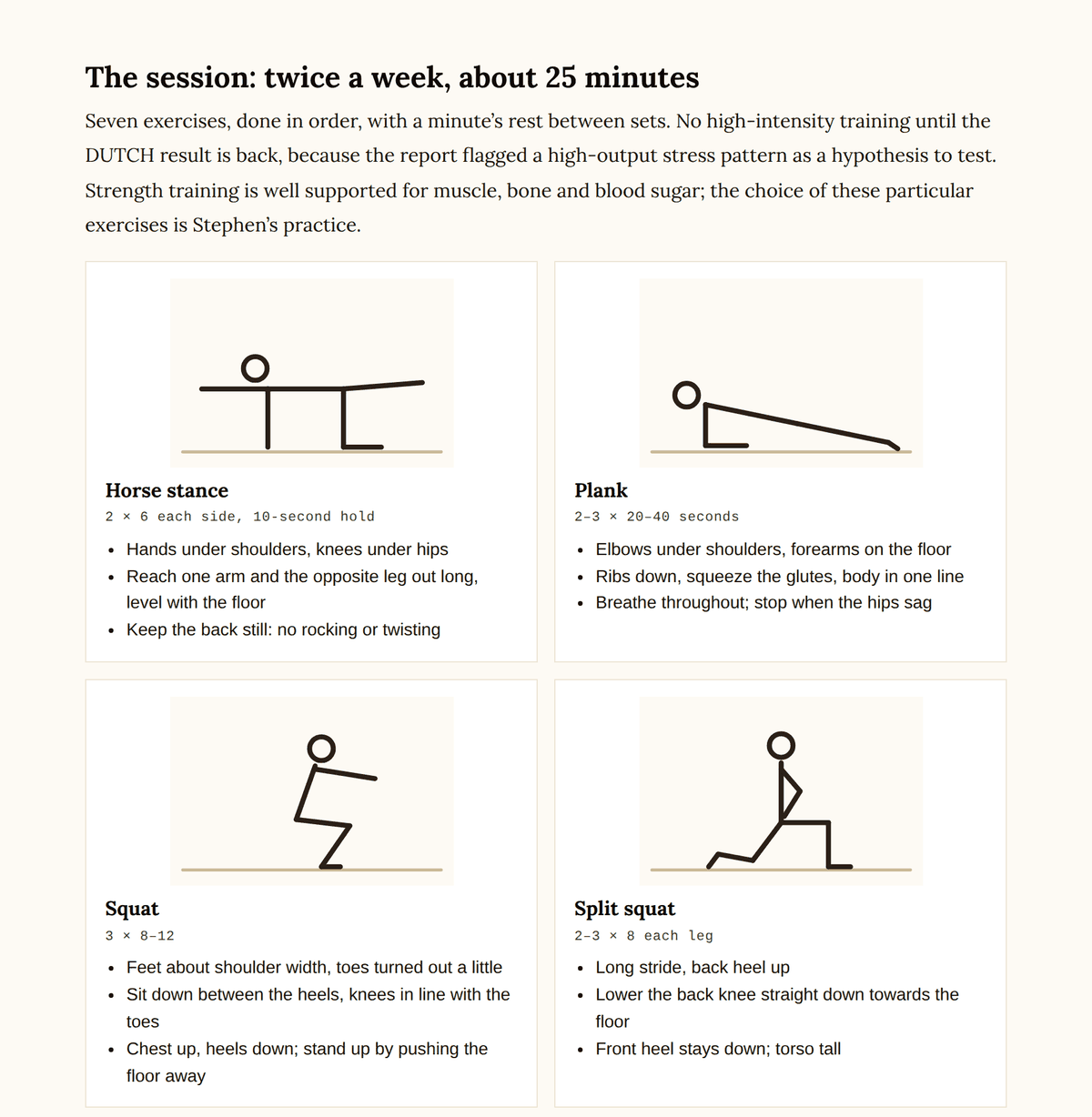
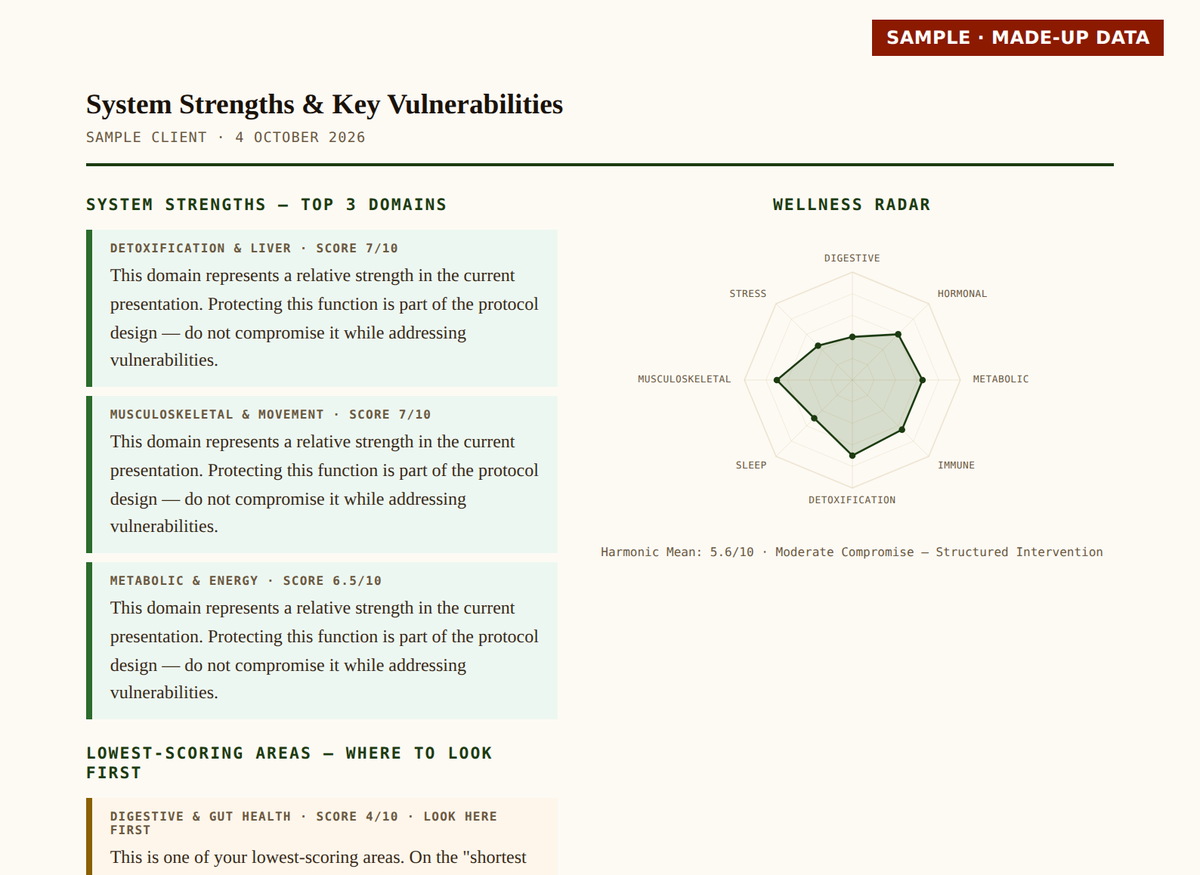
See it on one page: how the investigation fits together, then an example report and an example plan for a made-up client.
These are the presentations I see most often, with what is worth checking for each. Some of it is in the five tests; some of it belongs with your GP.
"Sometimes the most useful thing I can tell you is that nothing needs doing. If that's what your results say, that's what your protocol will say."
Most of what your five tests reveal responds to intervention. Some of it does not — homocysteine that keeps climbing despite methylated B vitamins, T3 that will not shift on appropriate thyroid support, oestrogen clearance that stays sluggish however well the gut is working.
Some of those residual patterns may have a genetic component, and that is the point at which a DNA panel earns its place — not before.
Genetics tells you what you are predisposed toward. Functional testing tells you what is actually happening right now. They are not the same thing, and the second is more useful.
Someone with an MTHFR variant may have perfectly adequate methylation if their diet, cofactors and gut function support it. Leading with genetics tells you about a risk that may never have been expressed. Leading with function tells you what to do on Monday.
Hormone metabolism and thyroid — the oestrogen detoxification pathways, cortisol regulation, and the enzymes converting storage thyroid hormone to its active form. These sit directly alongside what your DUTCH panel measures.
Cardiometabolic — lipid handling, insulin sensitivity, inflammatory tendency and metabolic efficiency. Read against your blood chemistry.
Nutrient handling — beta-carotene to vitamin A conversion, B12 absorption, the vitamin D pathway, omega-3 metabolism, iron regulation, lactose tolerance. This is the layer that explains why two people on the same diet end up with different nutrient status.
Neurotransmitters and circadian rhythm — the dopamine and serotonin architecture, and the clock genes governing sleep timing. Read against your organic acids results.
A variant is a predisposition, not a diagnosis and not a destiny. Most of what these genes describe is modifiable by what you eat, how you sleep, and what your gut is doing. That is the whole point of running the functional tests first.
One caveat worth stating plainly: the panel includes APOE, which carries information about long-term dementia risk. Some people want to know and some emphatically do not. We discuss that before the test is ordered, not after, and you can choose not to receive that section.
When: at your three-month retest, or once the functional picture has stabilised.
How: a saliva sample collected at home. One sample covers all reports.
Cost: £150 for the panel, plus £50 per interpretation report. Four reports are available — £350 for the complete picture. Discussed and agreed at your retest consultation, never added automatically.
Existing clients: ask AIdan about the DNA add-on, or raise it at your next consultation.
The TDG Programme is a comprehensive clinical investigation. The fee covers everything — all five test kits, laboratory coordination, clinical analysis, a consultation for each test, written protocol, and follow-up support. Nothing is additional.
The 20-minute call is free and without obligation
Not ready for the full programme? The interpretation guides are a self-guided starting point at £197 each — or speak to us about the Resilient Gut System programme.
I started in athletics and boxing coaching before spending nearly four decades working with clients whose symptoms were real but whose investigations kept coming back normal. That gap — between feeling unwell and getting an explanation — is what the TDG programme was built to close.
The Test, Don't Guess philosophy is not complicated. You cannot optimise what you haven't measured. You cannot address root causes you haven't identified. And you cannot build a credible protocol from a single test viewed in isolation.
Every protocol I produce is built from the intersection of five test results, viewed through seven body systems, informed by nearly forty years of working with people. There is no template. Everything is specific to your results.
The 20-minute call is free and without obligation. It's a conversation — we review your history, your symptoms, and establish whether TDG is the right next step for you.
Book your free 20-minute call →20 minutes · No obligation · Online via video call
Ask AIdan about the programme, the tests, or how functional testing works. For anything about your own case, the free call is the place.
Clinical education tool — not a diagnostic service. Open full concierge →